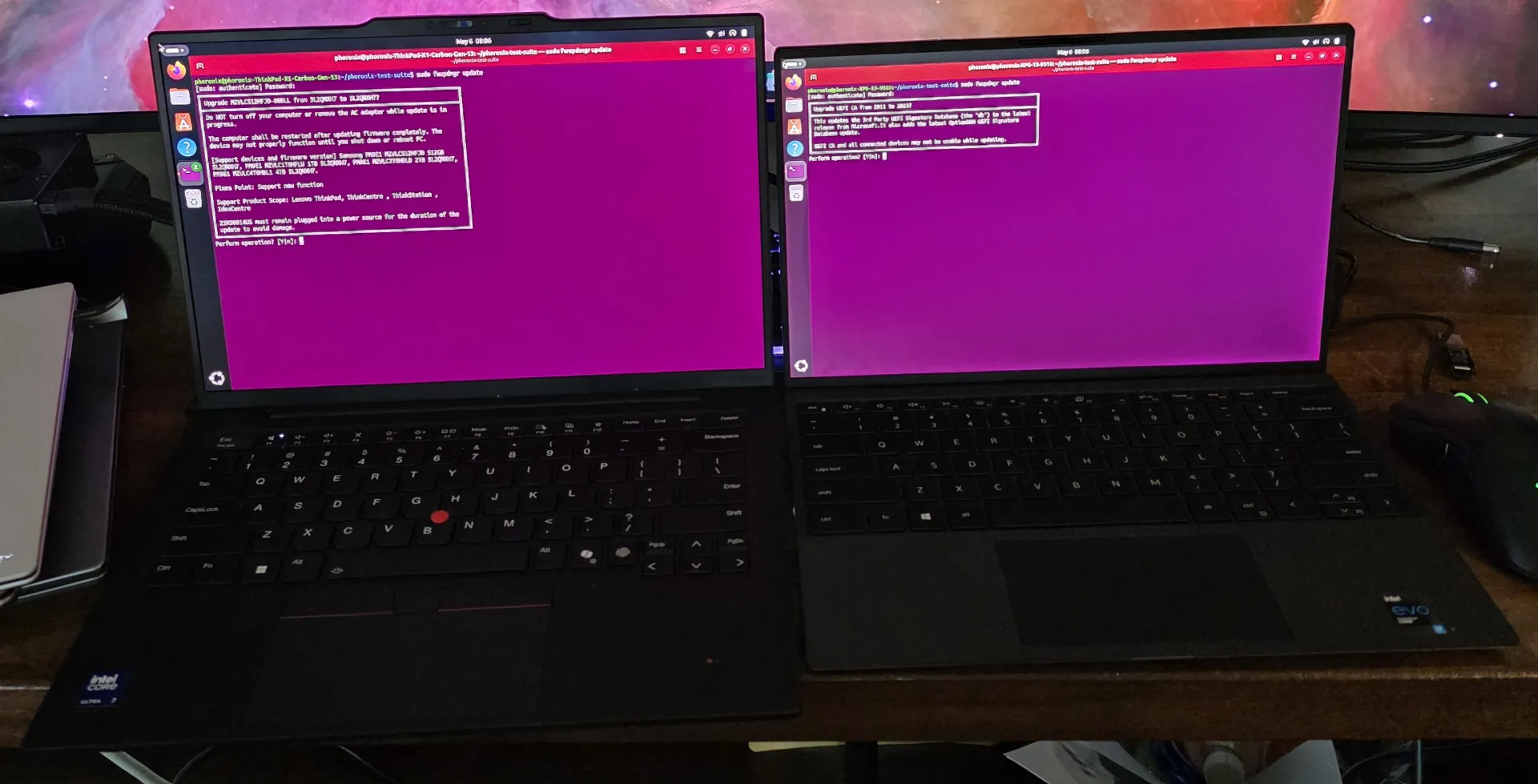
Holy moly, $100k a year each. I hope this more than covers LVFS’ costs and give them enough headroom to keep improving it.
For these companies it must be pocket change, but that can be a lot of money if the LVFS is efficient enough.
Dell and Lenovo both sell Chromebooks, which technically run a variant of Linux. Those laptops are especially popular in schools.
It’s smart investment on their part and broadens their options longer term.
All in all a net positive on all fronts.
They also sell laptops and desktops, mostly workstation-class, with Linux preinstalled. I’ve always had great results with fwupd on Lenovo laptops, great to see them sponsoring something useful.
as large hardware vendors, i’m pretty sure they were to getting to the point where they would lose features or even access to the service if they didn’t start paying-in.
Lenovo and Dell laptops are the best for Linux for some time already. Thinkpads get the spotlight but the Latitudes are no hassle too.
Lenovo and Dell laptops are the best for Linux for some time already. Thinkpads get the spotlight but the Latitudes are no hassle too.
A costco HP I grabbed in a pinch has been rocking linux without any issues from day one.
Good for you. In my anedocte, Pavillions were a removed to install Linux.
I have an HP Envy from several years ago and the BIOS is super locked down so I can’t enable secure boot on it. With my previous HP laptop, I had a ton of trouble getting the WiFi to work
So why this company and not coreboot?
NovaCustom uses Dasharo, developed by 3mdeb. Isn’t that better?
This is talking about fwupdt firmware and patches, not uefi/bios replacement.
Isn’t uefi bios firmware? What’s the difference?
Those are considered firmware, yes. And these can vary in their installation as being updated via the firmware interface itself or some other update mechanism.
Some firmwares like on certain IBM thinkpads, my surface pro 6 and others can be updated directly via a Linux command called fwupd, but the firmwares must live in specifics public repositories.
This news means we’ll all have a much better time using fwupd to update these on dell and lenovo machines, but the firmwares themselves will remain proprietary blobs.
Coreboot replaces the bios/firmware altogether, and it’s not an easy task to get new ones, unfortunately.
Ah, thanks. So this is just an open source tool for closed source crap.
the alternative is manually (and somewhat regularly during your hardware’s support period) searching a manufacturer’s web site for a bios update, hoping that your bios has a built-in flasher or there being at least a boot disk or ‘dos’ flasher you can slap on a usb to do it… lvfs is a good thing.
Oh, surely it is a good thing.
But I think we can demand lenovo to just source hardware with libre firmware. That’s a better thing.
Looking for the day that Lenovo will make Thinkbook firmware updates available via fwupd like it does for Thinkpad.
How to get firmware updates without fwupd?
I keep Windows just for the BIOS firmware updates. Next laptop won’t going to be a Thinkbook and probably not a Lenovo because of this grip.
Any recommendations? I am in the market for a new laptop as well.
Dell and Framework. Thinkpads are also super reliable, don’t hesitate because of my rant. There aren’t that many options already. You can check the HSI level (the security of the device) in here: https://fwupd.org/lvfs/hsireports/devices
Sadly, Framework doesn’t ship to my country yet.