
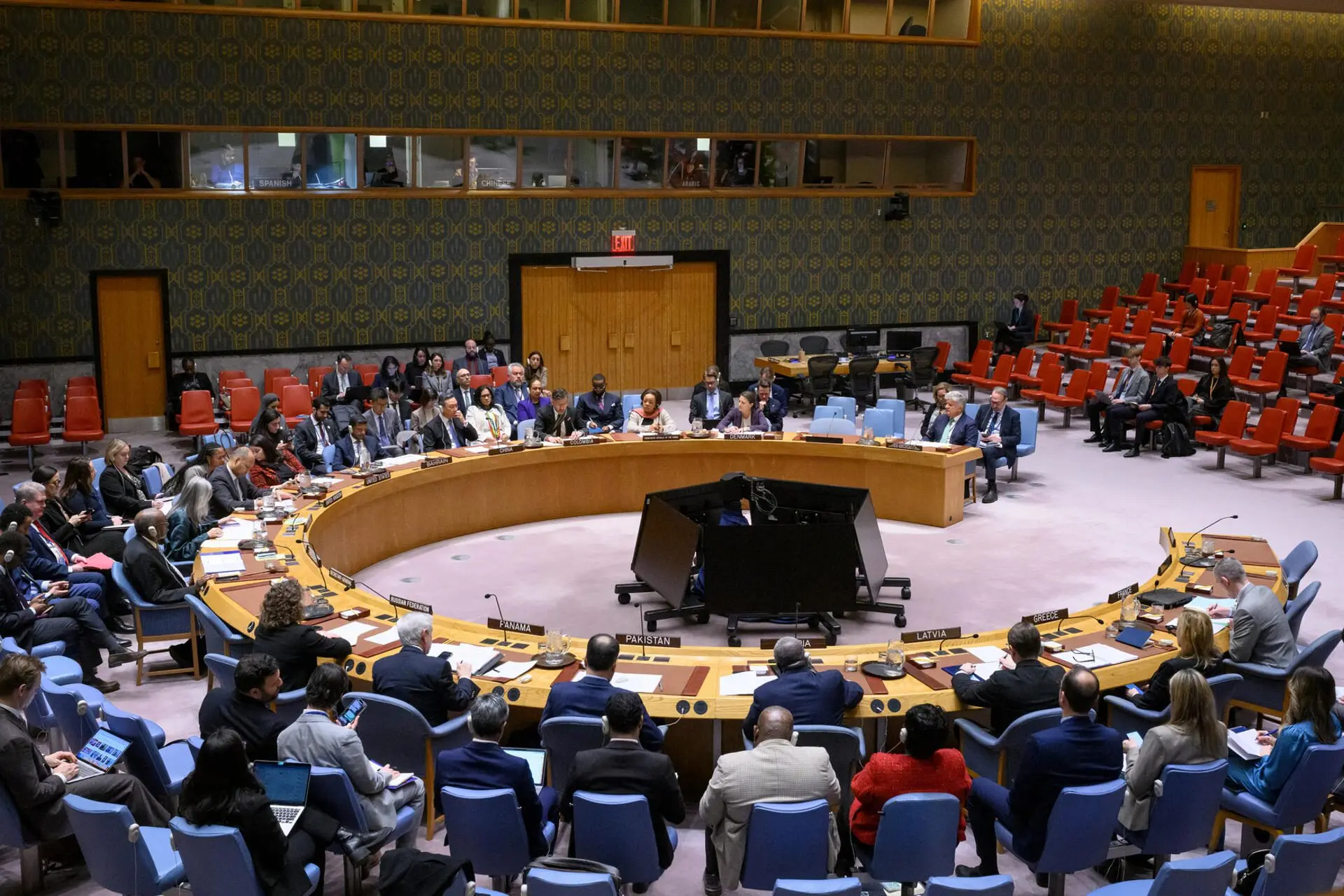
UN Secretary-General António Guterres warned on Friday that the organization is facing an “unsustainable” financial situation that requires “immediate action by member states” that have outstanding dues, according to his deputy spokesman, Farhan Haq, at a press conference.
The crisis stems from two converging factors: accumulated defaults by several countries and the legal obligation to return unused funds . Haq recalled that last November the UN had already warned that the repayment of nearly $300 million in loans could “trigger a liquidity crisis ,” and noted that "these figures now show that this situation is imminent . "
Despite more than 150 states fulfilling their payments in 2025, the organization closed the year with a record $1.56 billion in outstanding dues, more than double that of 2024 .
According to Guterres, in a letter addressed to member countries, "if the payments owed are not received or the return of funds is not suspended, the organization could run out of money to maintain its operations . "
The current financial mechanism places the UN in a “Kafkaesque circle”: it must repay $1.3 billion in 2027, including nearly $900 million from cuts in peacekeeping operations, despite not having initially received those resources.
“The current trajectory is unsustainable. It leaves the Organization exposed to structural financial risk ,” Guterres warned in his letter.
Faced with this scenario, the organization is preparing to implement the UN80 initiative, which includes the elimination of 2,681 jobs and cuts of over 21% in special political missions. The approved budget for 2026 amounts to $3.238 billion, a reduction of $577 million (15.1%) compared to 2025.
However, the UN will not be able to fully implement this budget if revenue does not improve drastically , since financial rules require returning “unspent” amounts to member states.
Spokesman Haq stressed that current reserves are insufficient to guarantee liquidity and emphasized, “It’s now or never .” Reforming the budget rules requires a two-thirds majority in the General Assembly and approval from all five permanent members of the Security Council.
Meanwhile, the organization insists that the non-payment by key contributors such as the United States and Russia puts vital humanitarian aid programs and peacekeeping operations at risk.
Surely this couldn’t possibly have anything to do with a certain country using its control over financial institutions to prevent processing payments from “bad” countries.