

☆ Yσɠƚԋσʂ ☆
- 2.77K Posts
- 1.21K Comments
Joined 5 years ago
Cake day: January 18th, 2020
You are not logged in. If you use a Fediverse account that is able to follow users, you can follow this user.



 8·19 hours ago
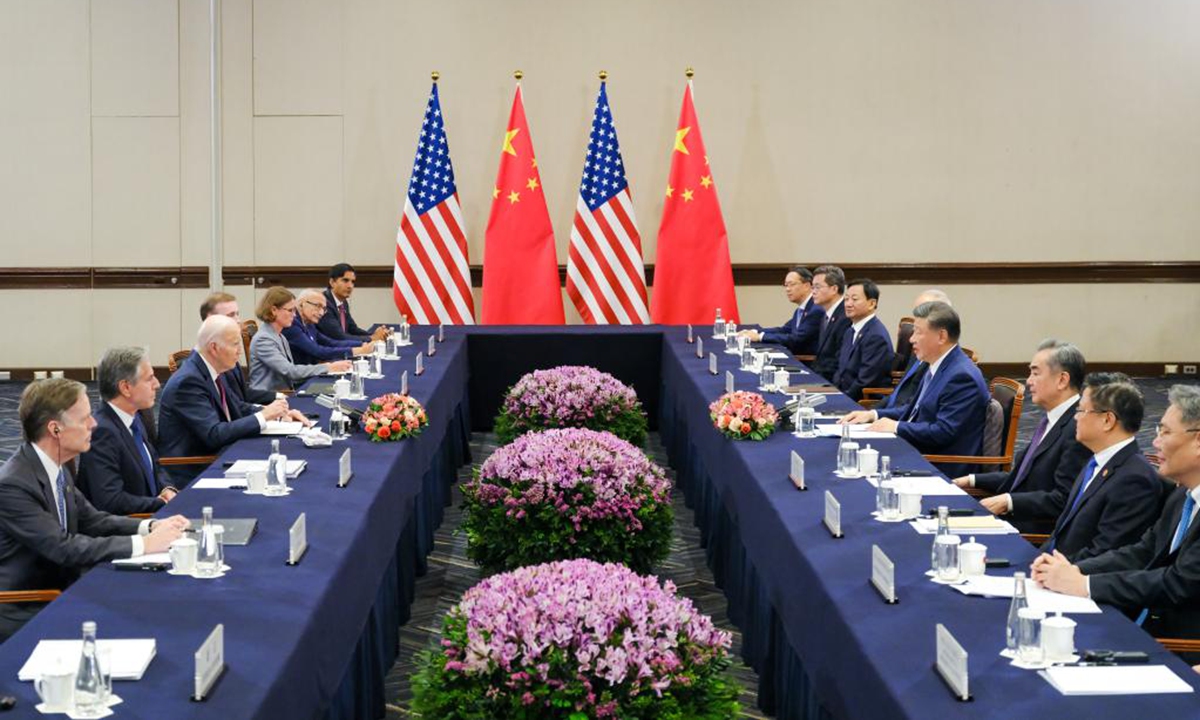
The US is clearly starting to distance itself from project Ukraine now. That said, I don’t expect that the US will alter its stance to simply admit that Russia has won. The most probable scenario is that Russia and the US will secretly negotiate a behind-the-scenes agreement, and the US will just cut aid to Ukraine while continuing to publicly engage in verbal posturing. The US admin will say that it has more pressing concerns with China and the Middle East, and it’s now time for Europe to step up and assume a larger role. However, everyone knows that Europe is not any position to do so. Therefore, the conflict will likely end on Russian terms without the US openly admitting defeat. As an added bonus, the US will secure lucrative military contracts with European nations for decades to come.
He’s likely just going to flee to US or UK in the end.
Russia won, it’s time to start engaging with reality.
I’m hoping we’ve reached a point where this is a self reinforcing phenomenon with enough socialist and socialist friendly states in the world to make it easier for new ones to form going forward.

Given that Russia has a competent government and isn’t on a verge of a civil war, not sure in what way America is like Russia.
Maybe even the start of Americans engaging with reality, I’m not holding my breath though.
 19·2 days ago
The worst part about LLMs is that people ascribe some sort of intelligence or agency to them simply because the output they produce looks coherent. People need to understand that these are nothing more than Markov chains on steroids.

There are lots of different kinds of games out there. If you’re new to games and like puzzles, here are a few I can recommend.
Portal is humorous and has fun puzzles, pretty easy to get into. Viewfinder is another similar type of game, also The Stanley Parable
Baba Is You is a creative puzzle game.
Planet of Lana, and Limbo, and Somerville are neat puzzle/platformer games.
Torchlight us a good example of an action RPG genre, Children of Morta is another.
FTL is a neat roguelike game.
Faeria is a card deck building game.
Turn based tactics games can be pretty fun, and are easy to get into. Triangle Strategy is a good one to try.
I also find narrative driven games really fun. For example, The Wolf Among Us is really excellent. Afterparty is pretty entertaining.
All of these should be fairly easy to get into if you’re just starting gaming.

I’m not sure what point you’re trying to make here to be honest. You claimed that the US has no intellectuals and no people who have deep political understanding. I listed a bunch just off top of my head, now you’re moving your goal posts.
PSL as a party isn’t focused on electoralism. It’s a worker movement, and De la Cruz is an excellent leader for this movement. If you still think that elections in a rigged system matter then you are in dire need of reading theory you deride here.
And in your opinion the demographic that is going to drive change are unpopular people who are subjects of news discussed on this site and this site only.
No, and if you actually bothered reading what I wrote then you’d know that the demographic I identified are people feeling the exploitation. People like Chris Smalls who are starting to organize on the ground. The fact that you think bread and circuses is somehow a unique phenomenon in the US that’s never happened in history is absolutely incredible.
Good luck with your magical unions organically forming out of thin air bud. I’m sure it’ll happen any day now.
Sometimes they mean that someone knows theory, sometimes they mean that someone has talked to someone else about how the boss is annohying, sometimes they mean you’re planning a violent wildcat labor action.
It’s like you’re unable to comprehend the concept of degrees. All of these things work together in practice. People who know theory help educate others, and people talk to each other at the level they are able. Trying to see this as black and white is absurd.
The whole point is that when you’re cornered you rely entirely on quoting and throwing theory at people without explaining how that theory practically applies to the modern day.
Another weird straw man. What theory means practically in modern day has been explained by me and many other people on this very site. I even explained that in this very thread earlier, and you promptly ignored that.
Name one. Literally name one.
Michael Parenti, Richard Wolff, Chris Smalls, Michael Hudson, Claudia De la Cruz, just off top of my head
Hmm… It’s almost like uhh they’d rather watch Mr Beast on YouTube which is quite literally my point.
And my point is that these people don’t matter. They’re not the demographic that’s going to drive any change.
In that order, as it’s more difficult to actually win gains through “polite” society shit like voting and negotiations, you have to do things that require more sacrifice.
And how are you going to convince them to show up to that union meeting exactly. Perhaps you might even have to talk to them, to have a conversation where you convince them that showing up for a union meeting is in fact in their interest. That’s what debate, discussion, and education means.
If you are in any way thinking that the conditions in the 21st century US are equivalent rather that merely rhyme with the conditions in the 19th and 20th in Russia as much as you can take “What is to be Done?” off the shelf and use it as a playbook then there’s really no point in this discussion.
Weird straw man since nowhere did I say that. What I said is that there is real poverty in the US, and people are struggling to make ends meet. Nowhere did I suggest there’s going to be some sort of a proletarian revolution in the US as there was in Russia at the start of the 20th century.
Also, there are plenty of highly intelligent and articulate people in US who explain the problems in clear terms. Russia doesn’t have some unique tradition of grand political theorists. The problem in US is that most people don’t think they need to be educated, and want quick and easy solutions to difficult problems.
I’m going to stop here because it’s clear that we’re not getting anywhere convincing each other of anything. I’ve said all needed to say here.
This is completely untrue because union participation rate went down in the 1920’s. If what you’re saying is true then unions went into firefights intentionally on the back foot.
Where do you think unions come from, they just appear fully formed out of thin air in your mind? Unions are a product of people talking to each other, sharing grievances and deciding on collective action as the solution.
You’re conflating, we have to fight the boss for our freedom with we have to create a glorious workers movement to build communism. The former requires no education if you’re paid in scrip and working at the end of a bayonette. That’s literally what the history says.
Yes, the former absolutely requires education. People need to understand how class relationships work, how collective bargaining works, how effective organization works. Modern leftists who want to skip all that are deeply unserious.
Yeah I agree, and I can assure you that those people aren’t going to be able to tell you what the Parenti Yellow Lecture is, or what What Is To Be Done? is or who wrote it.
I can assure you that they will just like people such as Fred Hampton, who did actual real world organizing instead of online trolling could.
Yeah it appeared specifically because the 1920’s was the most violent decade of labor action.
And the violent labor action in 1920s wasn’t some spontaneous event that happened out of the blue. It was a product of many years of organizing which started with having public discussions about the conditions the workers were experiencing.
If we woke up tomorrow and everyone understood Parenti, nothing would actually change until there was a demonstration of the willingness to truly fight, and the fruits of truly fighting.
One thing is a prerequisite for the other. You can’t put the cart before the horse here. Without general public understanding, no organized resistence to oppression is possible.
The idea of education and vanguardism as a solution is kinda silly because. we’re still just playing a game of prisoners dilemma and in the US, why bother with that and instead just watch Mr Beast. You’re not a Russian peasant dirt farming for a share cropper, you’re a modern subject of capital with access to youtube.
The fundamental problem is exactly the same, and education and vanguardism remains the solution. The mechanics of organization may be different, but the underlying principles remain the same. Movements need leaders, organization, and a common set of ideas that people rally behind.
I can assure you that people who are going to be radicalized and who will organize aren’t the ones sitting watching youtube. They’re the people who are feeling the exploitation through their personal lived experience.
Getting them to show up for what specifically?
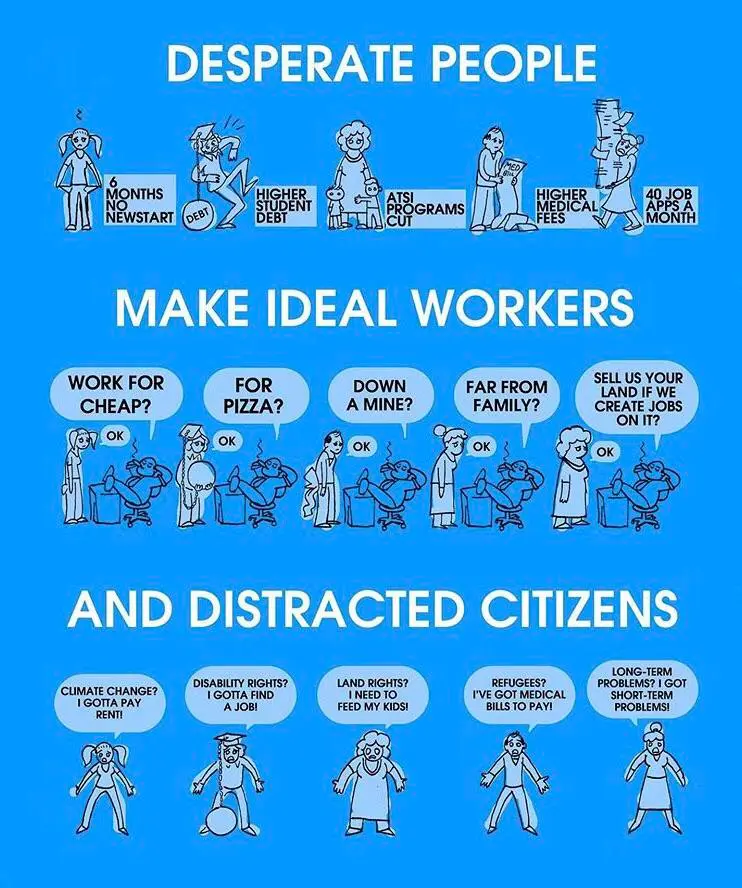
Again, people need to understand what it is that’s being proposed and why it’s in their interest to participate. If you can’t even articulate that here, whom are you going to convince exactly. And yes, you are very much dealing with real genuine poverty and overwork in 21st century. Millions of people are struggling to make ends meet, working multiple jobs, and being stuck in debt.
Once again, worker power in 1930s didn’t just magically appear out of nowhere. Seriously, read up a bit of history on how the US labor movement actually originated. Also, still waiting to hear what specifically you’re proposing here aside from whinging.
You’ve written walls of text in this thread, yet it’s not clear what it is you’re actually proposing. How exactly are you planning to reach people if not by talking with them?





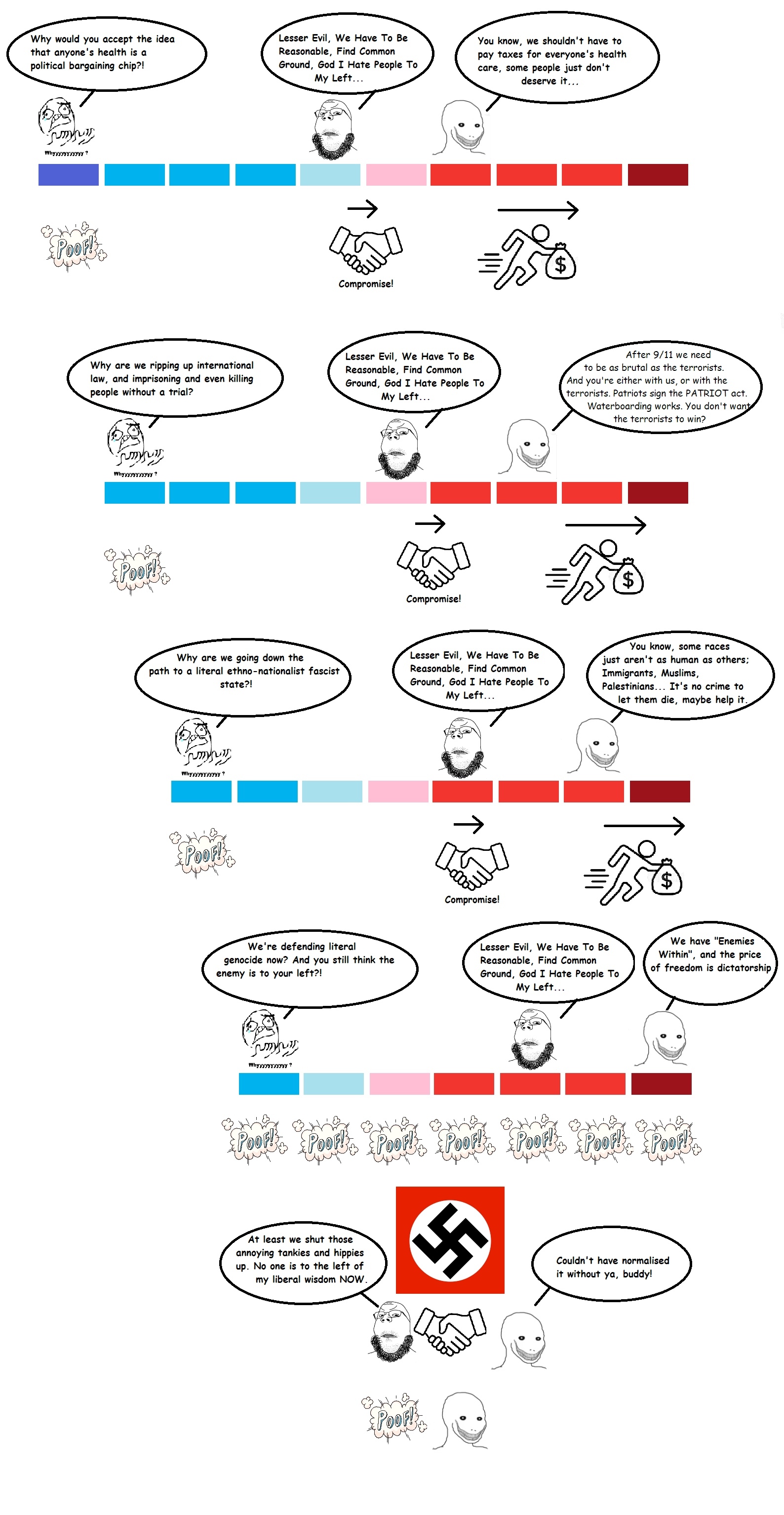
He has to stay till the last moment if he wants to keep political power. He’s not in any personal danger.