

3·
15 days agoNot on the roadmap. Notes are plain .md files on your disk. What I do is luks encrypt at the filesystem level.
Not on the roadmap. Notes are plain .md files on your disk. What I do is luks encrypt at the filesystem level.
Sure, working on that.
It’s just a naming coincidence. It has nothing to do with the Helix editor.
Known issue - the AppImage is built on Arch so it works on Arch, Fedora, openSUSE, etc. For Debian-based distros, use the APT repo or download the .deb directly
That’s exactly the way I do it. However, the mobile app is something that will be made in the near future.
Yes, local-first markdown like Obsidian, but fully open source (AGPL-3.0).
Note linking with square brackets - yes, supported. Graph view too so you can see connections between notes.
If you don’t rely on Obsidian plugins, you’ll feel right at home.
Android is on the roadmap, but the desktop experience comes first. Still early days.

Not yet, but it’s on the roadmap. The app is still young, right now I’m focused on getting the desktop experience solid based on feedback before shifting to mobile.
vs Obsidian: Same local-first philosophy with plain .md files, but HelixNotes gives you a clean WYSIWYG editor out of the box. No plugin setup, no CSS tweaking, no learning curve. Open an app, write, close it. vs Joplin: Joplin uses its own database format internally. HelixNotes stores everything as plain markdown files in folders on your filesystem. Also Tauri instead of Electron, so much lower resource usage. Both are great projects. I built HelixNotes because I wanted UpNote’s UI with Obsidian’s philosophy, and that combination didn’t exist.
I wrote a longer comparison here: https://helixnotes.com/why-i-built-helixnotes.html

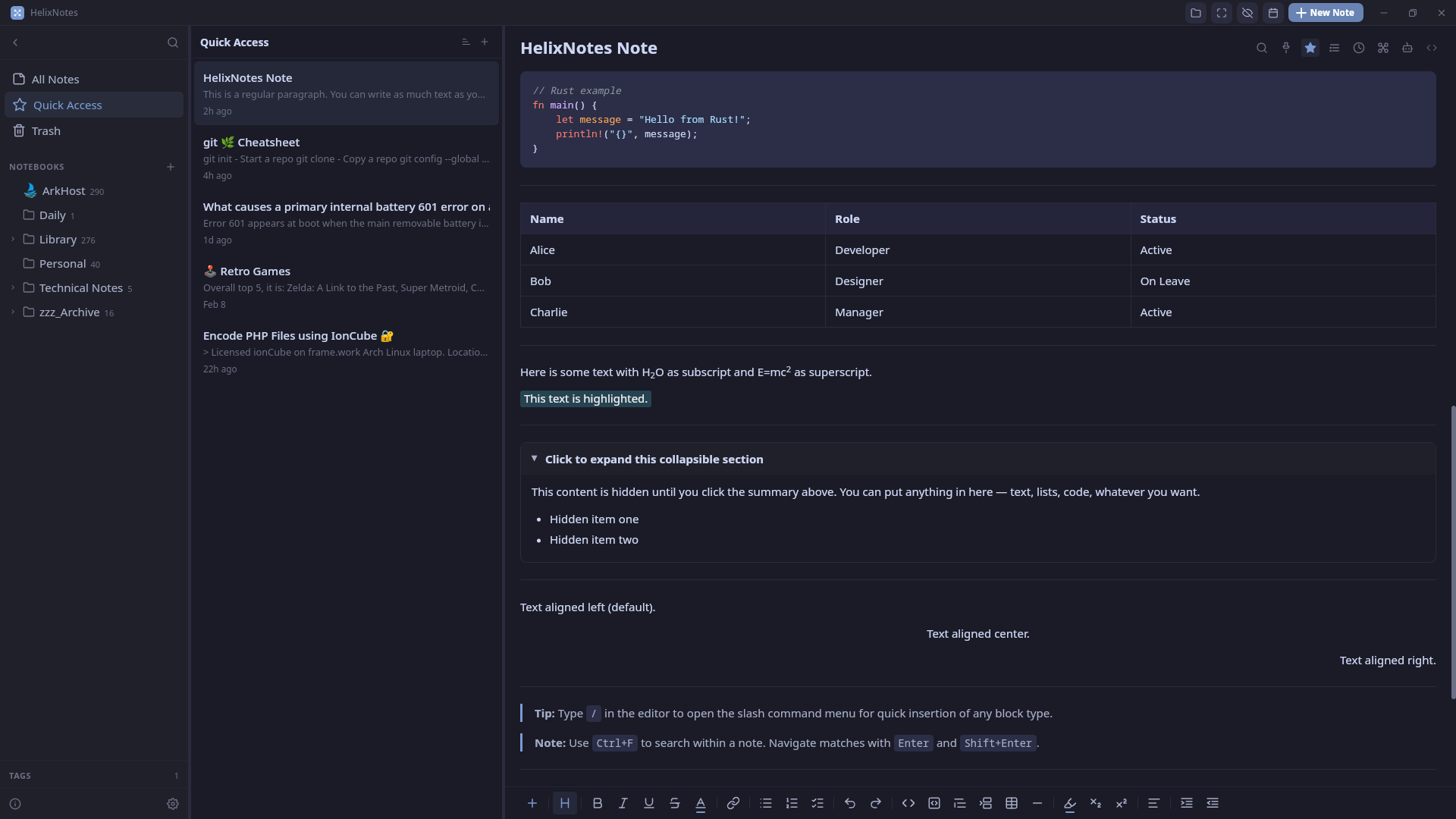
Yes, Claude was used as a coding assistant during development. Architecture, features, and direction are all mine. Source is AGPL-3.0 on Codeberg - you can read every line yourself.