
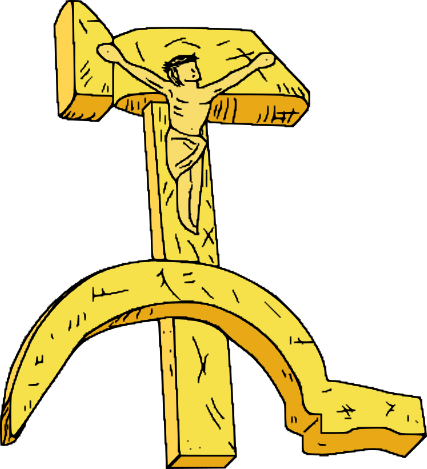
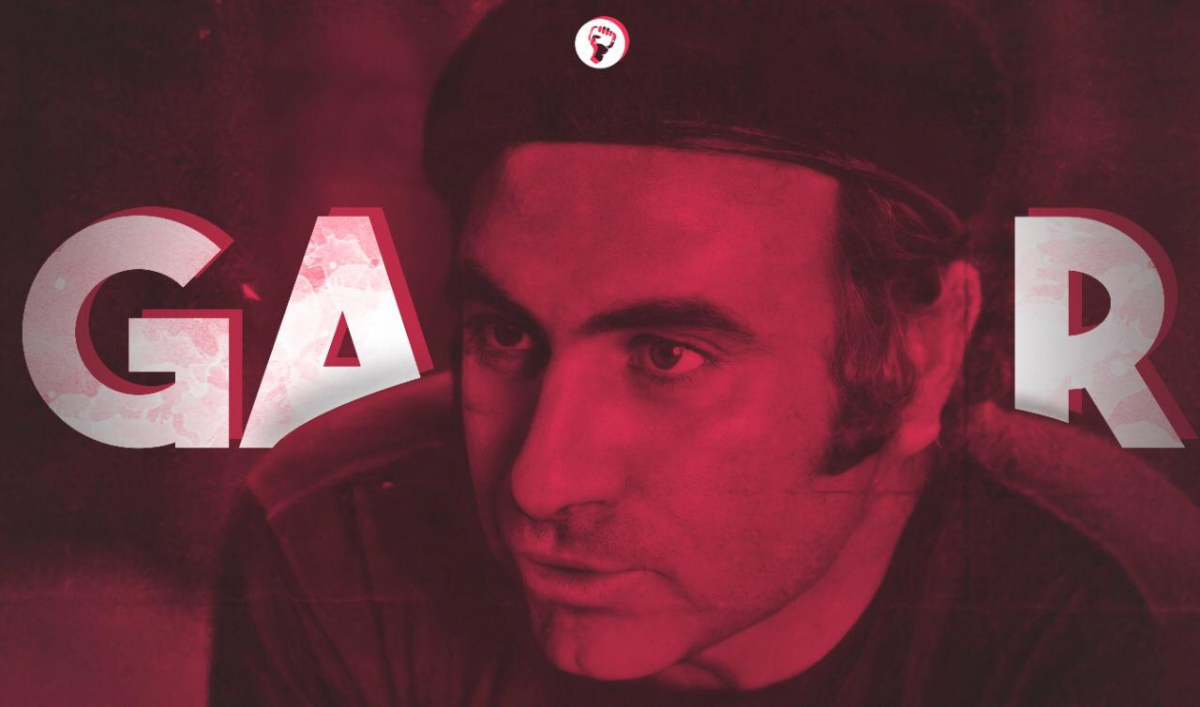
Gaspar García Laviana arrived in Nicaragua in 1970 as a young priest from Asturias who had left Europe to serve the poor of Latin America. He had witnessed firsthand the exploitation of workers in Madrid, where he became involved with committed Christian movements, but it was in Nicaragua that he understood—through raw experience—that poverty was not an accident, but a structural problem, a direct consequence of an oppressive system.
Before arriving in the country, Gaspar already embodied a deep class consciousness inherited from his father’s mining work. However, it was by immersing himself in the rural reality of Rivas, Tola, and San Juan del Sur that he understood that the Christian mission demanded more than just comfort; it demanded social justice.
In a country with over 50% illiteracy, with communities lacking roads, schools, and healthcare, Gaspar built classrooms, formed cooperatives, and opened medical clinics. But isolated acts of solidarity were not enough; the very structure that condemned the peasantry had to be transformed, and it was the Sandinista Front that was fighting for that transformation. Commander Carlos Fonseca had already announced this in October 1970: " The Sandinista Front, at the head of the popular masses of Nicaragua, is sacrificing itself not to obtain a meager crumb for the people, but to achieve a radical social and national transformation."
Thus, the decision that would change his life forever matured within him: to unite his Christian faith with the revolutionary struggle of the Sandinista National Liberation Front.
Soldier of Christ and Soldier of the FSLN
In 1974, Gaspar made the most radical and coherent decision of his ministry: to join the Sandinista National Liberation Front. He did so out of moral responsibility, stating with prophetic clarity that Somoza’s regime was more than a power structure; it was a sin.
Gaspar understood that the Nicaraguan peasant was not poor by chance, but as a result of a regime that protected landowners, prostituted humble young people, and stripped the people of all dignity. He himself denounced:
“I have seen the iniquitous exploitation of the peasant… I have seen how a few become obscenely rich in the shadow of the Somoza dictatorship.”
Their community center—where prayer, literacy, organization, and medical care coexisted—became a social and spiritual hub. So much so, that it was targeted by attacks from the National Guard.
Gaspar was aware of the depth of the damage caused by the oligarchy. Hence his famous reflection: “Trying to change the peasant is like plowing the sea,” a phrase that expresses not resignation, but clarity about the magnitude of the revolutionary task.
Upon joining the FSLN, Gaspar received training in clandestine operations, logistics, community organizing, and military leadership. His pastoral vocation, far from fading, transformed into a total commitment to the liberation of the Nicaraguan people.
The preferential option for the poor
Gaspar’s political and social thought is clearly expressed in his 1977 Christmas letter, a document in which he summarizes the injustice that Nicaragua was experiencing and the moral urgency of confronting it. This is not just any political manifesto: it is the sincere testimony of a priest who saw in Somoza’s regime an absolute negation of the Gospel. His denunciation of the brothel “Luz y Sombra”—closed to protect two minors—made him a direct target of Somoza’s repression.
Based on that experience, Gaspar concludes that the Sandinista Front’s armed struggle is a just war, drawing on the Christian tradition of Saint Thomas Aquinas and Liberation Theology. He states with conviction:
“Somozaism is a sin, and freeing ourselves from oppression is freeing ourselves from sin.”
His poetry, letters, and reflections show that his decision to become a guerrilla fighter was not an act of desperation, but the logical consequence of his faith. As he wrote in Campesino 2 :
“I felt your poverty in my flesh…
I wanted to extinguish your poverty with legalistic justice;
when I couldn’t, I became a guerrilla fighter.”
Gaspar in the historical continuity of the Sandinista Popular Revolution
Commander Daniel Ortega described Gaspar as a “great awakener of the people’s consciousness,” a man with a profound gift for leadership, human sensitivity, and moral clarity. It was Commander Camilo Ortega who guided him in his revolutionary training, directly integrating him with Delegates of the Word who would later become combatants.
Gaspar never doubted the people’s victory. His letters overflow with hope; he repeats time and again, “when we win,” “upon achieving victory.” His Christian faith and his faith in the people were inseparable. And so it was: Gaspar gave his life on December 11, 1978, but on July 19, 1979, Nicaragua was reborn as a new, free nation.
Today, Gaspar García Laviana remains an essential symbol of Nicaragua’s revolutionary identity. His life is a concrete expression of authentic Christianity, active love, social justice, and the defense of the people.
The proclamation as a National Hero —according to Presidential Decree No. 23-2021— reaffirms not only his place in Our History, but also the duty to study his work, his thought and his example as an essential part of the ethical and political formation of Our People, as a permanent inspiration and as a Sublime Apostle of our Christian, socialist, fraternal and solidarity proposals and practices.
References
- The 19th Digital (2021). Presidential Decree: Gaspar García Laviana, National Hero of Nicaragua
- Gaspar García Laviana (1979). Songs of Love and War . Ministry of Culture.
- FSLN (1988). Commander Father Gaspar García Laviana, Biography .
- Miguel d’Escoto (2009). Anti-imperialism and Nonviolence . Ocean Sur.